[gtranslate]



Adhesion Testing for Structural Sealants: Methods Explained


Adhesion is the difference between a sealant that seals for 20 years and one that fails in five. For structural sealants, adhesion testing is not optional — it is the acceptance gate before any curtain wall project leaves the factory. Here are the structural sealant adhesion testing methods every specifier and distributor should know.
1. Tensile Testing (Tensile Strength)
2. Peel and Adhesion-in-Peel Tests
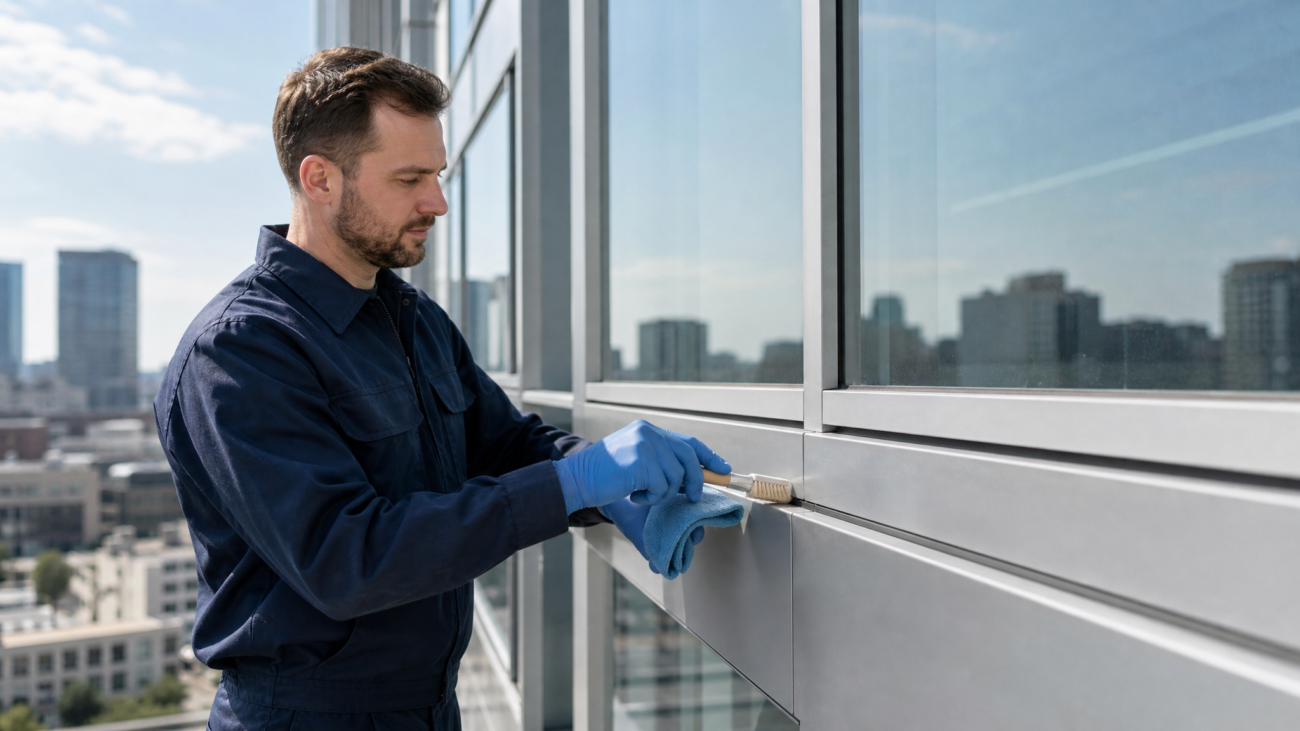
Peel tests measure how well the sealant resists being pulled off the substrate at an angle. They expose weak surface preparation — the most common cause of field failures — that a straight tensile test can miss.

3. Pull-Off Test (Field and Lab)
Using a hand-held pull-off gauge with a bonded dolly, this method verifies adhesion on the actual substrate — glass, aluminum or coated panels — both in the lab and on site. A clean break inside the sealant (cohesive failure) means good adhesion; a break at the surface (adhesive failure) means the bond is at risk.
4. Substrate Compatibility Testing
Not every sealant bonds to every surface. Compatibility testing checks adhesion to the specific substrates in your project — fluorocarbon-coated aluminum, anodized frames, tempered glass — plus compatibility with gaskets and other sealants in the joint.

5. Durability Testing: UV, Heat and Water
A structural sealant’s real test is time. Aged samples — after UV exposure, heat aging and water immersion — must retain a high percentage of initial tensile strength. This is why certified structural grades carry 20+ year service life claims: they have been tested the way the sun and rain will test them.
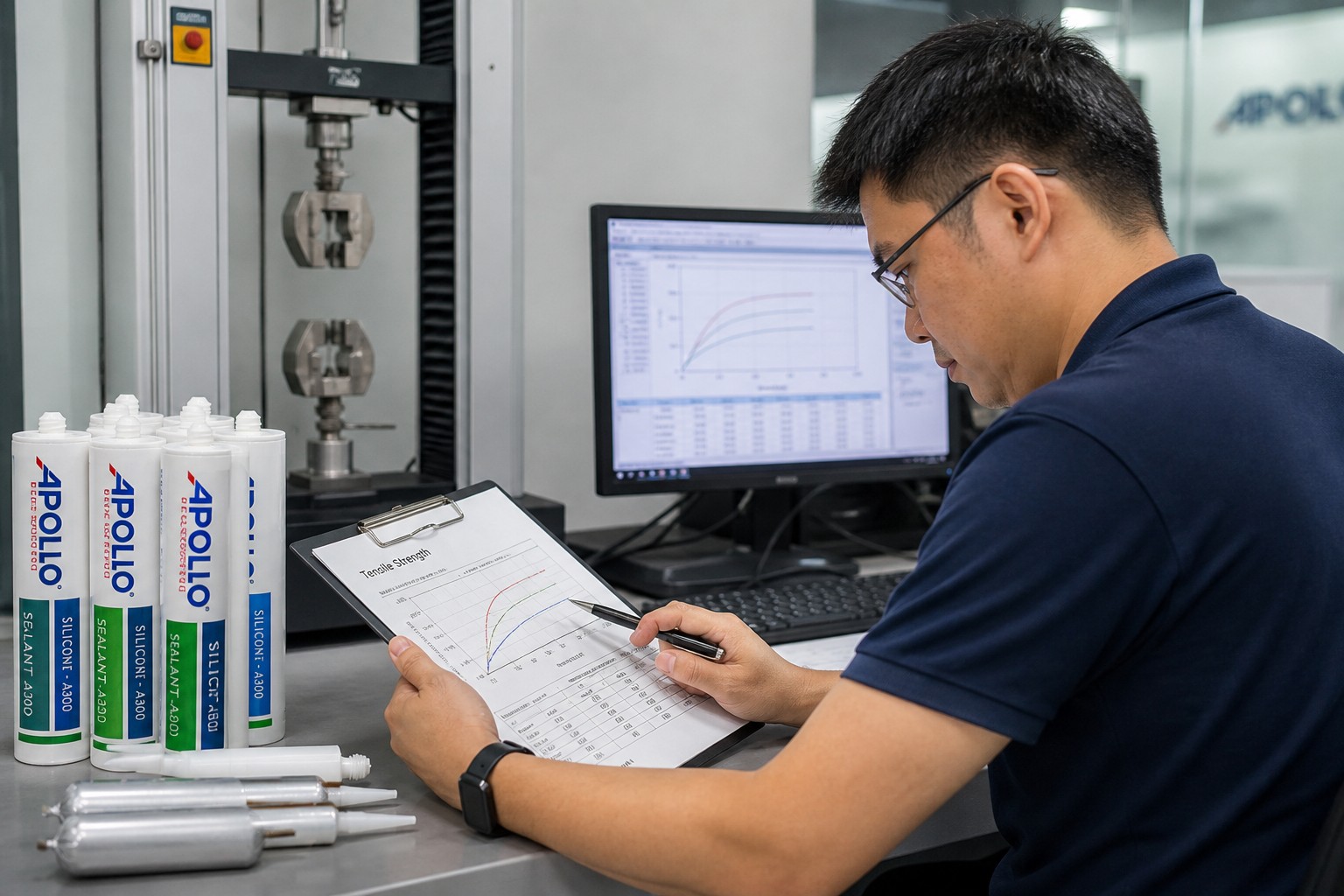
When you source structural sealant, ask for batch test reports covering tensile strength and adhesion after aging — not just the datasheet. That is how you verify the product will still be holding your facade together in year fifteen.
Test Methods at a Glance
| Method | Specimen | What it proves | Reference standard |
|---|---|---|---|
| Tensile adhesion (H-block) | Sealant bonded between two glass or aluminium plates | Tensile strength and elongation at break, and whether failure is cohesive or adhesive | GB 16776, ASTM C1135, ISO 8339 |
| Adhesion-in-peel | Sealant bonded to a substrate strip and peeled at a controlled angle | Bond durability under peeling stress, which is closer to real wind load at a bond line | ASTM C794 |
| Field pull-off | Bonded puck or core on an in-place joint | Whether the joint as built actually adheres — the only test that includes site conditions | Project specification |
| Substrate compatibility | Sealant in contact with gaskets, spacers, tapes and coatings | Staining, discolouration or loss of adhesion caused by contact materials | Project specification |
| Durability / ageing | Test specimens after heat, UV and water exposure | Retention of strength after ageing, which is what predicts service life | GB 16776, ASTM C1184 |
What to Ask Your Sealant Supplier For
- Batch test report for the delivered lot — not the generic datasheet. The lot number on the report must match the cartons you receive.
- Adhesion test on your own substrate — glass, anodised aluminium, coated panel or stone, whichever the project actually uses.
- Ageing data — tensile and adhesion values after heat and UV exposure, compared with the unaged baseline.
- Failure mode, not just the number — cohesive failure inside the sealant is acceptable; adhesive failure at the substrate is not, even when the strength value looks high.
- Movement class and modulus — stated explicitly so it can be checked against the joint design movement.
- Shelf life and storage conditions — relevant when a project stores sealant on site for months before installation.
Frequently Asked Questions
How is structural sealant different from weatherproof sealant in testing?
Weatherproof sealant is judged mainly on movement capability and adhesion after ageing. Structural sealant carries load, so it is tested for tensile strength and must retain that strength after heat and UV exposure — a weatherproof grade would never be specified on those criteria.
Can a datasheet value replace a batch test report?
No. A datasheet describes a product family. A batch report describes the material in the cartons you received. For structural applications the second one is the acceptance document.
Why does failure mode matter more than the strength number?
A high tensile value with adhesive failure means the bond let go at the substrate — the joint has already failed at the interface, whatever the number says. Cohesive failure means the sealant itself tore, which is the designed behaviour.
How often should field adhesion testing be repeated?
At minimum on the first installation of each substrate and sealant combination, and again whenever the substrate supplier, surface treatment or sealant lot changes. Project specifications often require periodic pull-off checks during installation.
The core method: a bonded sample (sealant between two glass or aluminum plates) is pulled apart on a universal testing machine until failure. The result — tensile strength in MPa — is the headline number on every structural sealant datasheet. Under GB 16776-2005, structural grades must maintain strength after heat and UV aging, not just at day one.
SIKEN’s structural grades (8000, 8800) are batch-tested under GB 16776-2005, with tensile, peel, compatibility and aging data available on request.
Failure mode matters just as much in automotive direct glazing: an adhesive failure at the glass almost always traces to surface preparation or a missing primer rather than the adhesive itself. Our guide to automotive glass adhesive walks through the four failure patterns that account for most warranty claims.
📧 info@sikenshop.com | 📱 WhatsApp: +8613780876997 | 🌐 https://sikenshop.com
Products for this application
Specification pages for the products referenced above: