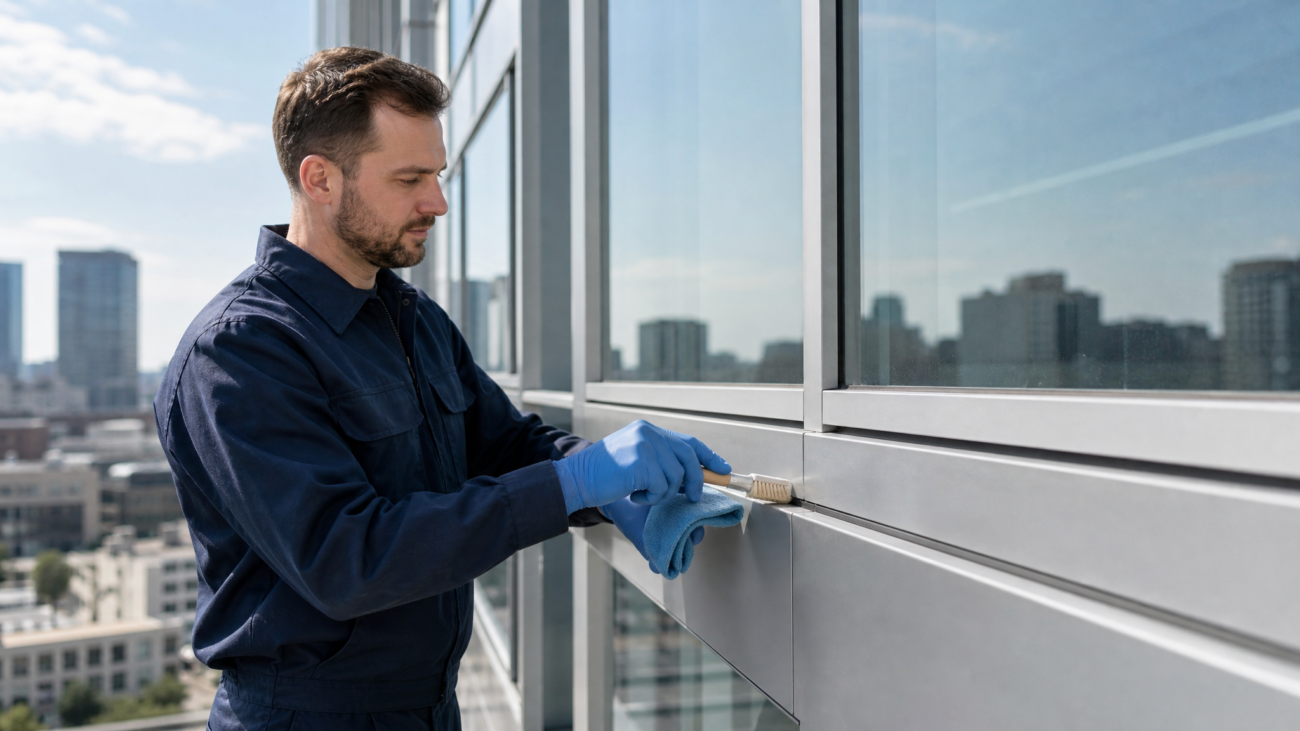


How to Repair Aged Curtain Wall Sealant Joints: A Step-by-Step Re-Sealing Guide

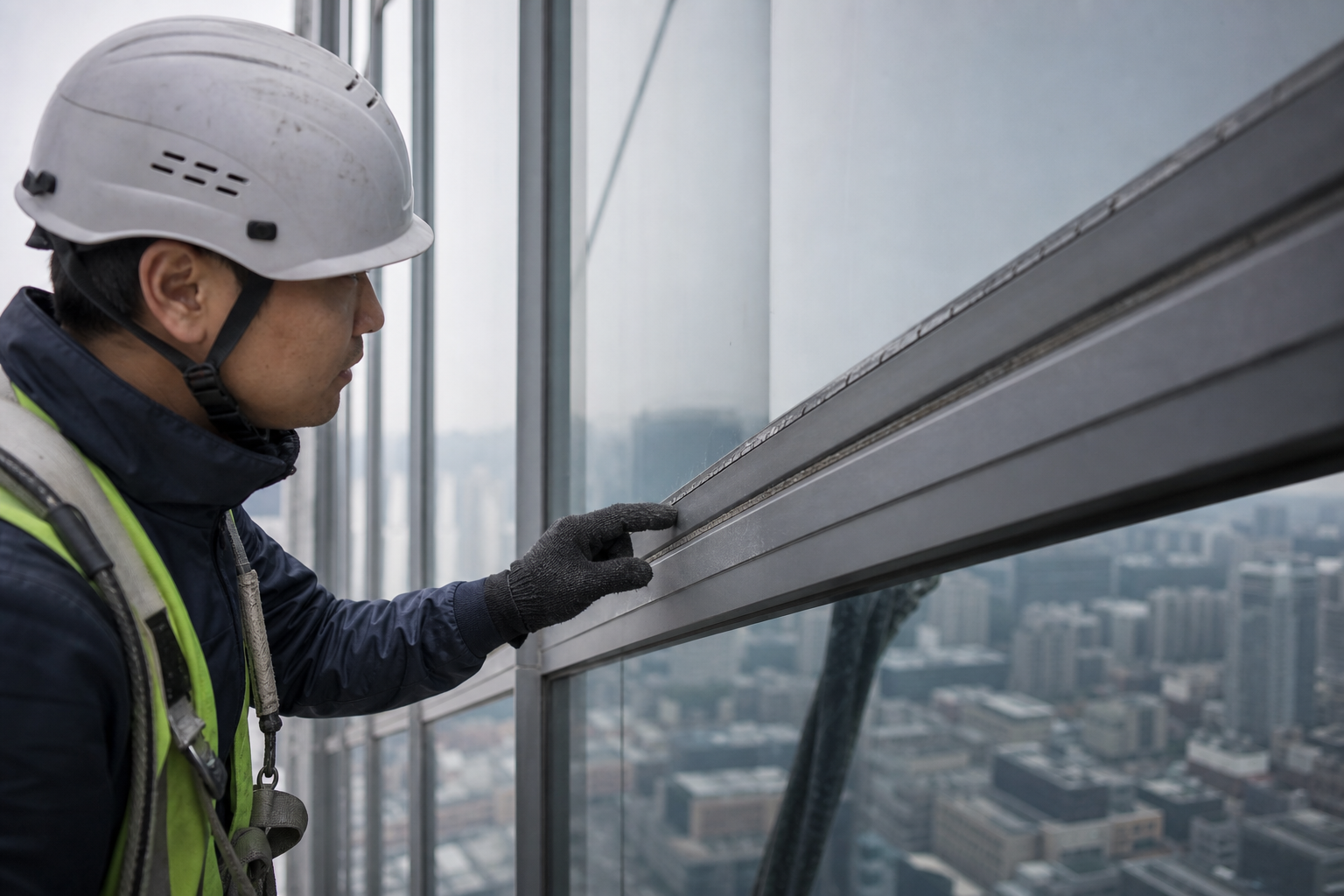
Curtain wall glazing is built to last decades, but the sealant joints that keep wind and water out are consumable components. This guide explains how to repair aged curtain wall sealant joints step by step, so distributors and facade contractors can plan re-sealing works with realistic timelines, material quantities and quality checks.
Signs That an Aged Joint Needs Re-Sealing
Survey the joints once a year, ideally after the wet season. Watch for surface cracking across the bead, shrinkage that pulls the sealant away from the glass or aluminium frame, loss of adhesion along the bond line, chalking or hardening, and water staining at the interior perimeter. Two or more of these signals on one elevation justify a full joint survey rather than spot repairs.
Step-by-Step Re-Sealing Procedure
- Survey and record joint width, depth and movement class for every elevation before removal begins.
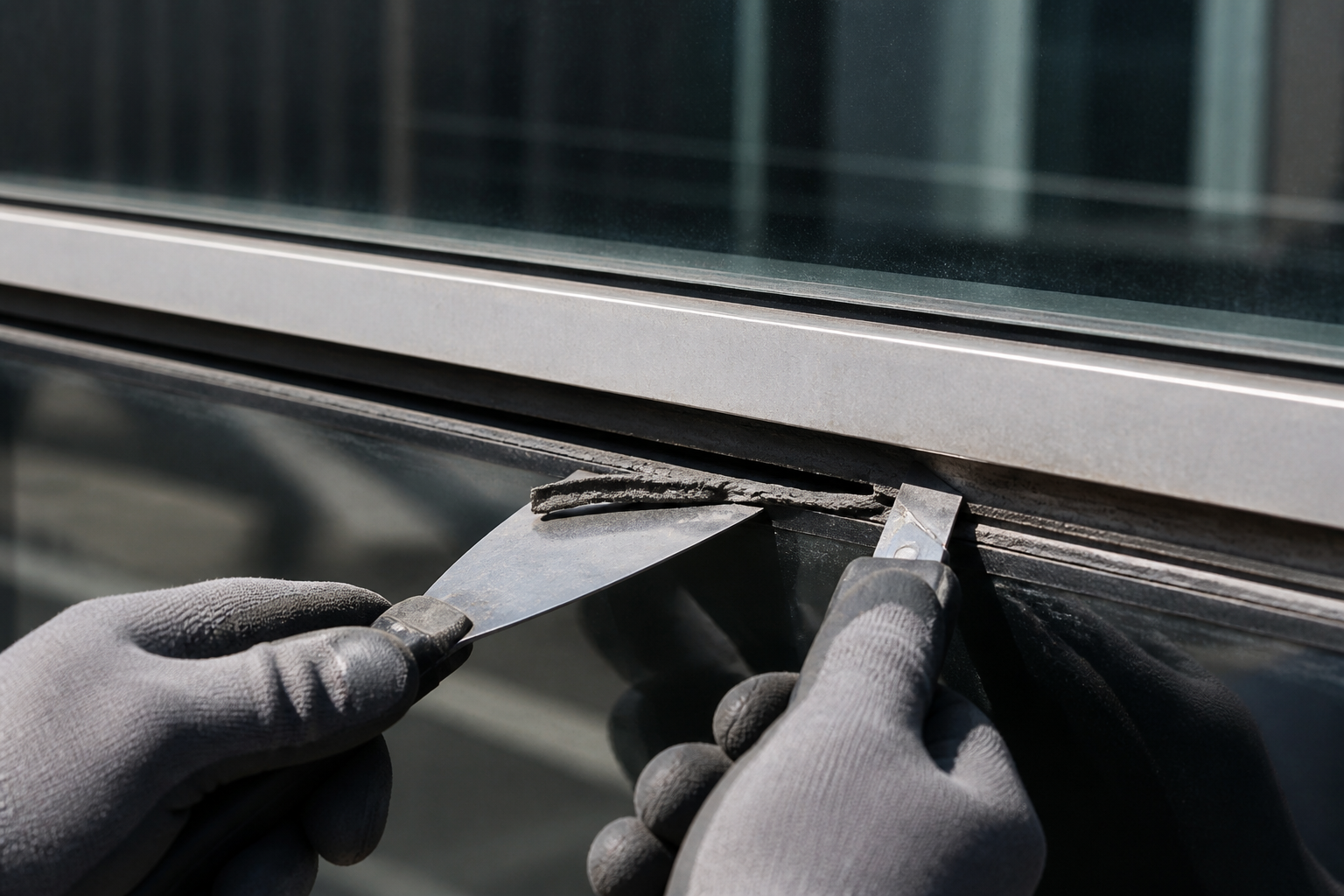
- Cut out the old sealant with a sealant cutter or sharp blade along both bond lines, keeping glass and anodised frame undamaged.
- Clean the substrates with lint-free cloths; glass is wiped with a solvent-approved cleaner.
- Reinstall the backing rod at the depth that keeps the recommended width-to-depth ratio.
- Prime where specified by the sealant data sheet for porous or coated substrates.
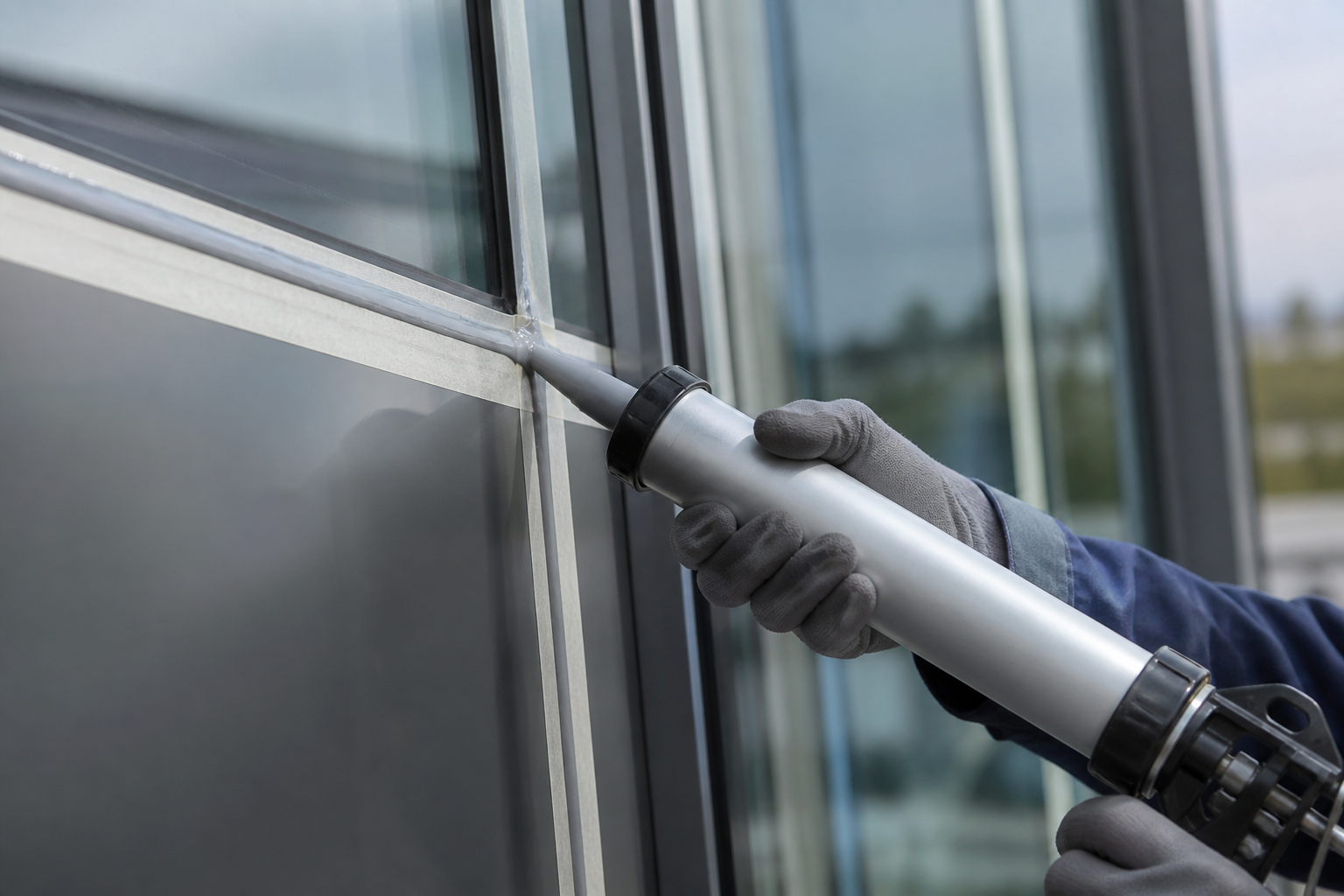
- Apply and tool the new sealant in one continuous pass, then tool immediately to a concave profile.
Choosing the Right Sealant for Repair Work
Repair projects add two demands that new-build sites rarely have: compatibility with the existing joint and cure speed that suits limited site access. For weather seals, specify a neutral-cure silicone or MS polymer with a movement class matching the measured joint movement. For structural joints such as silicone-glazed panels, use a sealant certified to GB 16776 or ASTM C920 and confirm adhesion with a peel test before full application.
Quality Checks Before Handover
Let the sealant cure to its data sheet, then verify a uniform bead profile with no voids, clean bond lines, a successful adhesion peel test on a sample joint, and a water spray test across the repaired elevation. Photograph each stage and file the records with the maintenance documentation.
Planning Your Next Facade Re-Sealing Project?
We supply batch-tested silicone sealants, structural sealants and MS polymers to distributors, OEM partners and facade contractors worldwide, with full technical documentation for repair works.
📧 info@sikenshop.com
📱 WhatsApp: +8613780876997
🌐 sikenshop.com